6.17 Hypertension (HTN)
Definition - Blood Pressure >140/90 for non-diabetics - Blood Pressure >130/80 for diabetics - Blood Pressure < 120/90 for high risk patients – age 55 plus non-diabetic CKD or CVD; age 75 and older
Typical Patient
- Overall prevalence of HTN in Canada is 23%, and increases with age
-
55 y/o
- Diagnosed at a younger age in men than women
- Common risk factors: Age, smoking, obesity, family history/genetic (female relative with hypertension diagnosed before 65 y/o or male relative with hypertension diagnosed before 55 y/o), dyslipidemia, diabetes, alcohol, poor diet
Essential Vs Non-Essential Hypertension - 90% of hypertension is essential hypertension, 10% of HTN is due to secondary causes - Essential hypertension is hypertension that is caused by multiple factors, including the ones listed above. There is a highly genetic component - Secondary hypertension is hypertension caused by a specific disease state. Common causes of secondary hypertension include: 1. CKD 2. Sleep Apnea 3. Primary hyperaldosteronism 4. Renal artery stenosis 5. Cushing’s syndrome 6. Pheochromocytoma (catecholamine secreting tumor in the adrenal gland) - There are certain factors that should lead you to think a patient is suffering from a secondary cause of HTN: 1. HTN in young patients 2. Sudden change in BP in a patient with previously controlled HTN 3. HTN that is resistant to medication Complications of HTN - An important diagnostic and prognostic indicator of HTN is end organ damage - Malignant hypertension will damage the eyes, heart, brain, peripheral vasculature, and kidneys - This may lead to loss/changes of vision, MI, CAD, TIA, stroke, dementia, peripheral vascular disease, aortic dissection, CKD
Symptoms/Clinical Presentation
- ‘Silent killer’: People afflicted with HTN will not be aware of it until there is noticeable end organ damage
- Presentation varies from asymptomatic to massive hemodynamic instability in the setting of dissection or MI
Physical Exam
- Eye: AV-nicking, cotton wool spots, micro-hemorrhages
- CVD: sustained PMI, S4, renal artery bruits, carotid/femoral bruits, peripheral edema
- Lung: inspiratory crackles, SOB, tachypnea- in the setting of volume overload secondary to CKD
21 “Hypertension”, Marcel Ruzicka, May 11 2016, uOttawa Faculty of Medicine
Investigations
- An essential part of the workup for HTN is the assessment of Cardiovascular Risk Factors. These play an integral role in the assessment of the patient’s mortality over a 10-year period. See appendix for Framingham Cardiovascular Risk Assessment Tool
- CBC, lytes (K+ is important as low K+ may indicate primary hyperaldosteronism), creatinine, BUN (Blood urea nitrogen), urinalysis and ACR- assess kidney function
- Fasting glucose- screen for diabetes
- Fasting lipid profile (HDL, LDL, HDL/LDL, triglycerides), ECG-to assess CVD risk Investigations for secondary causes of HTN
- Renal artery angiography to assess renal artery stenosis- this is the gold standard to investigate renal artery stenosis, however other modalities such as CT angiogram or MR angiogram could be used
- Renal biopsy- can determine different types of renal parenchymal disease 24-hr Urine for metanephrines and normetanephrines - catecholamine breakdown product, this for pheochromocytoma
- Sleep study for Obstructive Sleep Apnea
- 24-hr Urine for cortisol - for Cushing’s Syndrome
- Plasma Renin and Plasma Aldosterone for Conn’s syndrome (primary hyperaldosteronism)
Management/Treatment
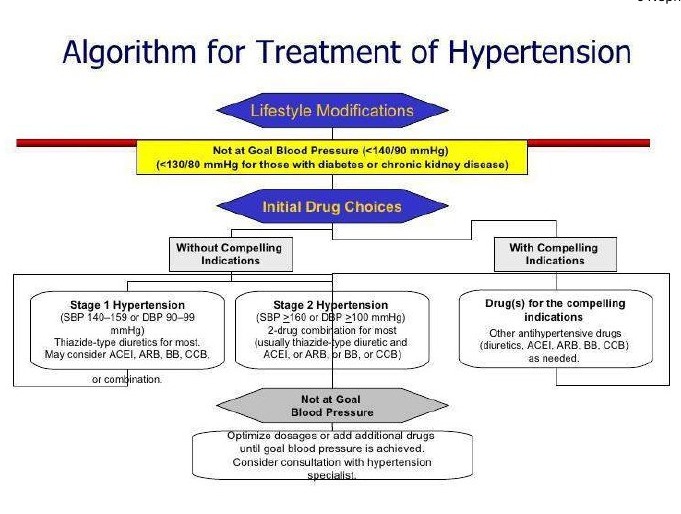
Treatment Goal - BP <140/90 for non-diabetic patients - BP <130/80 for diabetic/nephrotic patients- these patients are already at higher cardiovascular risk - BP< 120/90 for high risk patients – age 55 plus non diabetic CKD or CVD; age 75 and older Non-pharmacological - Diet: Salt and lipid restriction (protein restriction necessary if cause is CKD) - Weight loss: Weight loss is key to HTN management. 1kg loss= 1mmHg systolic pressure drop. Exercise without weight loss is not beneficial for HTN management - Diabetes management - Smoking cessation
Pharmacological - First line (used as monotherapy or in combination) - Thiazides - ACE inhibitor/ARB - Calcium channel blockers (dihydropyridines or diltiazem) - Beta-blockers - Add-on BP meds not recommended as first line therapy (unless for specific indication e.g. aldosterone blockers for primary hyperaldosteronism) - Alpha blockers - Mineralocorticoid/aldosterone blockers - Central sympatholytics - Arterial vasodilators